Mon, Sep 03, 2012 | 14:26 BST
ICO HD heading to PS Vita via remote play patch
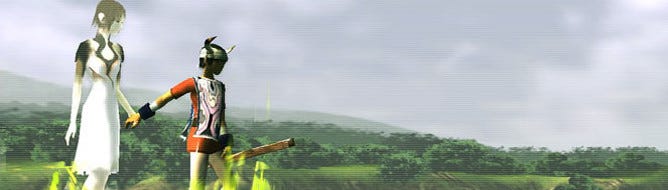
ICO HD was teased as running on PS Vita by Sony worldwide studios president Shuhei Yoshida this morning. The developer has confirmed that the game will head to PS Vita soon, pending a remote play patch for the HD edition.

Talking on Twitter, Yoshida apolgised, “Sorry to tease you, I was play testing Ico HD Remote Play on PS Vita. We are almost ready with a patch. Beautiful on OLED. More info soon.”
Cheers CVG.
Here’s the shot if you missed it:


64 comments
Older Comments
#51
ManuOtaku
03/09/12, 9:22 pm
#50
And what points those are let me see:
1.-An old concept, that was created when digital didnt exits
2.-TOS and EULAS done by one of the parts without rulings or controls, or without taking in cosideration the other involve part.
Yeah i got it, the end consumers is not the victim is the abuser here, yeah we dont need equal treatment, trhow empathy out of the gate.
#52
Joe Musashi
03/09/12, 9:24 pm
“Yeah i got it”
No, you don’t. Not even close.
And you don’t get to trample over the rights of others and still play the victim card.
JM
#53
ManuOtaku
03/09/12, 10:27 pm
53 Joe Your opinion , as much as i respected is not a fact, your opinions are based on points that are very subject:
1.-An old concept of ownership, that was created when digital didnt exited
2.-TOS and EULAS done by one of the parts without rulings or controls, or without taking in cosideration the other part involved, the users and their rights.
3.-Entitlenment on the user side aka vitimization, without realizing there is entitlement on the provide side of things.
My main issue is the need for a law that is equal ruling this type of transaction due the fact that ownership concept doestn apply to digital, because it was established when things were tangible, phisical, and therefore it has anything to do with entlitement or end users being victims; You keep mentioning issues that hasnt anything to do with the topic and doing personal diconstruction of my points of views, which is fine because thats who you are and how you operate, but that not means that youre opinions are facts, and neither does mine by the way,becuase they are that, points of view.
Desiring and wanting or hoping an equal legal system for all parts involve, is not bad, and is not asking for anything big actually, is just wanting fair treatment, is that is wrong to you fine, i dont mind it, what i do mind is you use your points as fact, that i dont agree ,and that is why argue with you or with anyone that posts here, pretending to give facts, disguised as opinion, thats i cannot let it pass it, so if you dont get my point fair, just do not pretend i have to get yours especially when they are as opinionated as mine.
#54
Joe Musashi
03/09/12, 11:24 pm
I’d prefer you didn’t make comments about ‘respecting my opinion’ when you clearly don’t and you make a point of ignoring and dismissing it. Its intended to come across as sincerity but its actually dishonesty.
Furthermore, you say I am passing off my opinion as fact. I agree, I am. However, I conveniently have reality on my side to back up my opinion. That my opinion, fact and reality all converge is no accident or coincidence. I’m also of the opinion that water is wet. I’m going to pass off that opinion as fact too. Feel free to disagree with that one too, if you like, it won’t make any difference.
You can look at my opinion/fact/reality by seeing the world as it is right now. My ‘opinion’ of the concept of rights and ownership, alarmingly enough, aligns with how things are currently working in the real world.
Now to the same broken points you keep repeating:
1) An old concept of ownership, that was created when digital didnt exited
No. It was created alongside digital media. YOUR concept of ownership is the archaic one, where you believe holding something in your hands means you are the owner. This is a common misconception regarding software. That you hold a disc in your hands does not mean you own the data that resides on that disc. The ownership of the software remains that of the publisher. You merely have access to that data, not ownership of it.
Sadly, you have this entirely back to front. Your insistence that this ‘old concept’ shows that actually, you’re the one clinging to the old concept of ownership and not aware/understanding of how ownership of digital media exists or works. It is an established concept and came about at the same time of digital media.
This is my opinion, substantiated by reality. Feel free to argue with it, in doing so you are also arguing with reality.
2.-TOS and EULAS done by one of the parts without rulings or controls, or without taking in cosideration the other part involved, the users and their rights.
Again, this is a moot point. Because if you don’t like the EULA or TOS then it’s simple: don’t accept it and don’t use the product or service.
That’s how it works. This is how things are in the real world. You cannot have access to the product AND disagree with the terms by which access is granted. Both go hand in hand. If you want one, you have to accept the other. If you don’t accept the terms then you don’t get the product/service.
If you accept the terms then it’s by your own choice and free will. So you are accountable for your own action. If you knowingly accepted terms you didn’t agree with simply to get the product or service you wanted then you have done that of your own free will and you have willingly given away your rights. Nobody but you are accountable for that. No rules need to be changed. You should not claim to agree to things that you don’t. Furthermore you have no argument after you have explicitly agreed to something. That time has passed. You declared agreement. Next time, don’t declare that you agree.
If you disagree with this then stop giving away your own rights. Be accountable for the actions you take.
This is my opinion, substantiated by reality. Feel free to argue with it, in doing so you are also arguing with reality.
And finally, a magical third point that you didn’t quote before – conveniently showing how contradictory and inconsistent you are:
3.-Entitlenment on the user side aka vitimization, without realizing there is entitlement on the provide side of things.
“the provide side of things” – that would be the actual owner. Well, gee, the owner is entitled to things. See, that’s why the concept (and understanding) of ownership is so crucial. Its theirs. It belongs to them. They own it. They get to say how it works. They genuinely are entitled.
“the user side” – that would be someone who isn’t the owner. They don’t own it. They don’t get a say. By spending money they acquire access not ownership. And that access is provided in very explicitly detailed terms.
There is no argument to be made about equality because the two parties are not equal. This is not a crime. These are not human rights. This is consumerism. Arguments about equality are redundant. If you were equal to the owners of the software then you would no doubt have made the same hundreds or thousands of man hours into its production. You would have invested the same hundreds of thousands or millions of dollars into its cost. You have not done these things. You are not equal.
You are not a victim either. The enforcing of the rights entitled of the legitimate owner are not some form of unjust persecution. They are fully permitted and the owner is entitled to enforce them. More than likely you will already have agreed to this in advance. So there is no possible way you can claim any sort of victimisation.
By contrast your disregard for the owner’s rights puts you in the wrong and makes a mockery of any argument for any rights that you make. You don’t care for rights. You only care for what you want. If someone else’s rights conflict with your desires then you have shown that you will ignore their rights. If you are so happy to ignore the rights of others then demanding the your (fictional) rights be not only acknowledged but supported by some legal system is some of the most blatant double-standards I’ve ever witnessed.
You have no claim to equality. Only your misplaced sense of entitlement where you want more than you are due and so make emotive but tragically misplaced arguments about equals.
By all means, argue for everyone’s right to clean water, food and education. I will be with you 100%. But you have no leg to stand on to claim equality in the context of digital media that you do not own.
This is my opinion, substantiated by reality. Feel free to argue with it, in doing so you are also arguing with reality.
JM
#55
ManuOtaku
04/09/12, 1:52 am
“I’d prefer you didn’t make comments about ‘respecting my opinion’ when you clearly don’t and you make a point of ignoring and dismissing it. Its intended to come across as sincerity but its actually dishonesty”
I respect your opinion , but not agree with it, hence the impression of ignoring and dismissing it, but its not dishonesty, it is called not agreeing with your opinions, one is not in detriment with the other and viceversa
“1) An old concept of ownership, that was created when digital didnt exited
No. It was created alongside digital media. YOUR concept of ownership is the archaic one, where you believe holding something in your hands means you are the owner. This is a common misconception regarding software. That you hold a disc in your hands does not mean you own the data that resides on that disc. The ownership of the software remains that of the publisher. You merely have access to that data, not ownership of it.
Sadly, you have this entirely back to front. Your insistence that this ‘old concept’ shows that actually, you’re the one clinging to the old concept of ownership and not aware/understanding of how ownership of digital media exists or works. It is an established concept and came about at the same time of digital media.
This is my opinion, substantiated by reality. Feel free to argue with it, in doing so you are also arguing with reality”
Ownership since the very beginning in old greece, didnt was started with digital media, and during the formation and pondering of said concept, therefore is quite imposible that was the case, i mean the digital was part of the concept from the very begining.
Thats were i think we are arguing different things here, i am not saying we need to own the games in digital more than in physical, is that we need to have some rights on the account for that sevice, hence the my account tag on it, in order to the games under that account are also for the person that owns the account, it doesnt matter if the account is block or canceled or whatever it might happen, you have the games at your disposal in your PC, without any detriment of the account, that is something like a bundle of rights, were a thing in this case a digital copy can share the ownership by the provider and the end user, this will be more different that with the physical copy, were this is not the case or needed, therefore the need for an equal law is needed, in order to establish the equal ownership or something on those lines, because at the end of the day the provider is not the owner of the game, just the service.
I dont agree with the legal aspect of digital media born with it, because we dont have a digital media law, just the opinions of licenses and the use of licenses, which are form part of the physical media, just put it with more control with digital, due the account ownership, thats the only difference, but there is not law that rules this.
“2.-TOS and EULAS done by one of the parts without rulings or controls, or without taking in cosideration the other part involved, the users and their rights.
Again, this is a moot point. Because if you don’t like the EULA or TOS then it’s simple: don’t accept it and don’t use the product or service.
That’s how it works. This is how things are in the real world. You cannot have access to the product AND disagree with the terms by which access is granted. Both go hand in hand. If you want one, you have to accept the other. If you don’t accept the terms then you don’t get the product/service.
If you accept the terms then it’s by your own choice and free will. So you are accountable for your own action. If you knowingly accepted terms you didn’t agree with simply to get the product or service you wanted then you have done that of your own free will and you have willingly given away your rights. Nobody but you are accountable for that. No rules need to be changed. You should not claim to agree to things that you don’t. Furthermore you have no argument after you have explicitly agreed to something. That time has passed. You declared agreement. Next time, don’t declare that you agree.
If you disagree with this then stop giving away your own rights. Be accountable for the actions you take.
This is my opinion, substantiated by reality. Feel free to argue with it, in doing so you are also arguing with reality.
And finally, a magical third point that you didn’t quote before – conveniently showing how contradictory and inconsistent you are”
Is true i can or cant accept the TOS of EULAS changes, but it is a force situation because everything is tie to the account, if i choose not, because they take some of my rights or something i dont agree with, i lose MY account, and then the access to the games i possesed under that account, therefore is not really a choose situation, more a forced one, again the problems, lie in the ownership of the account, games and the lack of laws that guides this transactions and the boundaries on all parts involve.
“3.-Entitlenment on the user side aka vitimization, without realizing there is entitlement on the provide side of things.
“the provide side of things” – that would be the actual owner. Well, gee, the owner is entitled to things. See, that’s why the concept (and understanding) of ownership is so crucial. Its theirs. It belongs to them. They own it. They get to say how it works. They genuinely are entitled.
“the user side” – that would be someone who isn’t the owner. They don’t own it. They don’t get a say. By spending money they acquire access not ownership. And that access is provided in very explicitly detailed terms.
There is no argument to be made about equality because the two parties are not equal. This is not a crime. These are not human rights. This is consumerism. Arguments about equality are redundant. If you were equal to the owners of the software then you would no doubt have made the same hundreds or thousands of man hours into its production. You would have invested the same hundreds of thousands or millions of dollars into its cost. You have not done these things. You are not equal.
You are not a victim either. The enforcing of the rights entitled of the legitimate owner are not some form of unjust persecution. They are fully permitted and the owner is entitled to enforce them. More than likely you will already have agreed to this in advance. So there is no possible way you can claim any sort of victimisation.
By contrast your disregard for the owner’s rights puts you in the wrong and makes a mockery of any argument for any rights that you make. You don’t care for rights. You only care for what you want. If someone else’s rights conflict with your desires then you have shown that you will ignore their rights. If you are so happy to ignore the rights of others then demanding the your (fictional) rights be not only acknowledged but supported by some legal system is some of the most blatant double-standards I’ve ever witnessed.
You have no claim to equality. Only your misplaced sense of entitlement where you want more than you are due and so make emotive but tragically misplaced arguments about equals.
By all means, argue for everyone’s right to clean water, food and education. I will be with you 100%. But you have no leg to stand on to claim equality in the context of digital media that you do not own.
This is my opinion, substantiated by reality. Feel free to argue with it, in doing so you are also arguing with reality”
Like i said theres a lot of things involve in that entitlement, the account, which is the user account, the games that are under that account, and the ownership of the provider of the service, which owns the service but not the products, at least not 100%, therefore theres multiples owners on that transaction, like in a bundle of rights where one thing , here digital media, can have multiple owners, that is the situation described here, and for that it needs laws in equal terms for all parts involve, and by equal i mean that protects one part over the other, where one part cannot take decisions without an external part control or withotu guidence, therefore is equal treatment for everybody, maybe is not the right word, but i think that if one part cannot do wrongs to the other, because of abuse and control of power is equal.
In this particular case the end user doenst feel entitled, it feels abused by one part that rules the transaction without any limits, althought the end user haves his/her account, under the MY account label,in reality is at the mercy of the provider of the service changing the TOS as they like it, that needs a control, and laws are pretty much the only thing that controls this type of transactions were two parts are involve.
And sorry for the feeling of argue, is that the reality in where you live is not mine, is a very multiple reality like universe, and for that very subjective and not a fact.
#56
Joe Musashi
04/09/12, 7:09 am
“the reality in where you live is not mine”
Ain’t that the truth. Sadly, for you, my reality is the one this world appears to be running on.
JM
#57
ManuOtaku
04/09/12, 1:26 pm
#57 I can say the same, that my reality is the one the world appear to be running, hence the MY account tag on it, that establishs a ownership right there.
#58
Joe Musashi
04/09/12, 1:43 pm
Except that the account isn’t owned by you – it’s a database record on a database owned by somebody else. You merely have (write) access to it. Still demonstrating that you are failing to grasp the fundamentals concerning digital ownership. Still demonstrating that you are failing to grasp the reality of this world. A reality that billions understand and acknowledge.
JM
#59
ManuOtaku
04/09/12, 1:54 pm
#59 but it has the end user personal data, which holds the end user personal purchases, done with the end user personal money, he owns his/her access to the service, he do owns something in the end the access to their personal things in the server, hence the MY account, that is a very debated point of view IMHO, legally speaking, at least is a term that has strong connotations of ambiguity, thats is why we need laws for this, if you dont want to see it, because you dont want, thats fine, but is not a fact, or how the things should operate, we need to break false paradigms, you disregard all the points that doesnt suit your point of view.
p.s thats why we are seeing changings with rulings that favor the end user all over the world with digital media, so courts in a sense, feel responsible to give the end user their well deserved rights, but they are against your reality, right i forgot.
#60
ManuOtaku
05/09/12, 2:37 pm
Joe Mushashi Ok lets see how my point of view, did had some valid points after all, not bad for someone that didnt grasp the notions; source http://en.wikipedia.org/wiki/First_sale_doctrine
FIRST
“In the proprietary software industry, an end-user license agreement or software license agreement is the contract between the licensor and purchaser, establishing the purchaser’s right to use the software. The license may define ways under which the copy can be used, in addition to the automatic rights of the buyer including the first sale doctrine and 17 U.S.C. § 117 (freedom to use, archive, re-sale, and backup)”
The EULAS and/or TOS have the first sale doctrine on them, which they have freedom of use, archive, re-sale and back up), this first sale doctrine is for physical media, but is also applied to digital media, look for the word freedom of use and re-sale, they are key here becuase they define the physical media transactions, something we can do with physical games, and it is debated if this is also applied to digital or software too, but that i will touch it later on.
then it saids the following:
“The first-sale doctrine plays an important role in copyright and trademark law by limiting certain rights of a copyright or trademark owner. The doctrine enables the distribution chain of copyrighted products, library lending, gifting, video rentals and secondary markets for copyrighted works (for example, enabling individuals to sell their legally purchased books or CDs to others). In trademark law, this same doctrine enables reselling of trademarked products after the trademark holder put the products on the market. The doctrine is also referred to as the “right of first sale,” “first sale rule,” or “exhaustion rule.”
So very physical indeed, i mean for physical media, but is also part of digital media EULAS and TOS, so is in line with my comment #40
SECOND
“Application of first sale doctrine to digital copies of copyrighted works poses difficult policy questions. In today’s world, copies of copyrighted works, music, movies, and software, are increasingly bought by downloading through the Internet. For example, can a lawful purchaser of a song in MP3 format from the iTunes store be allowed, consistent with the first sale doctrine, to resell or distribute that copy to others? *** DIGITAL COPIES OF COPYRIGHTED WORKS DO NOT COMFORTABLY FIT WITHIN THE CONSTRAINTS OF THE FIRST SALE DOCTRINESHIP..***. Unlike transactions where a tangible copy changes hands, a digital transfer results in a reproduction of the work through the electronic transmission of a new copy of the work to its recipient. In other words, transferor retains the source copy unless deleted from the hard disk manually or through some special technology. By sending a copy to the transferee, the transferor infringes both the reproduction and distribution rights, but the first sale doctrine provides no defense to the infringement of the reproduction right. For example, this exact issue is playing out in the ongoing litigation against ReDigi, an online marketplace for pre-owned digital music”
So here basically says that this doctrine, first sale rule, which is part of the copyright and trademark, and for that ownership, and that also forms part of EULAS and TOS do not work for digital media, because is for physical medias, remember my comment number 40 heres a part of it
“the concept is old, it was for very tangible things, physical things, when digital didnt even exist, or neither was a notion in the mind of who created the digital space, we dont have laws that rule digital media,” so this also mentions that at the least is an strong possibility that this things are based on tangible things rather than digital, because its based on old concepts.
An then it says the following:
“The question is whether the first sale doctrine should be retooled to reflect the realities of the digital age. Physical copies degrade over time, whereas digital information does not. Works in digital format can be reproduced without any flaws and can be disseminated worldwide without much difficulty. Thus, applying the first sale doctrine to digital copies affect the market for the original to a greater degree than transfers of physical copies. The Copyright Office took the position that the doctrine should not apply to digital copies by stating that “[t]he tangible nature of a copy is a defining element of the first sale doctrine and critical to its rationale.”[1]”
Again my comment #40, stated above on this comment, where i said it was a concept based on tangible things, and for that the need for a equal legal system or law that is based on this new reality, is not that wrong, or neither is based only on my reality, which is not the world reality, right.
THIRD
Here we touch the entitlement clash on my comment 30, that went this way
“Of course is entitlement, as much as the provider of the service claims their entitlement over the user with the account, not just us the users claim entitlement here , it goes both ways in reality, therefore is the clash of two entitlements here, now the question is who needs the legal system the most?”
“Some software and digital content publishers claim in their End User License Agreements (EULA) that their software or content is licensed, not sold, and thus the first sale doctrine does not apply to their works. These publishers have had some success in contracting around first sale doctrine through various clickwrap, shrink wrap, and other license agreements. For example, if you buy MP3 songs from Amazon.com, the MP3 files are merely licensed to you and hence you may not be able to resell those MP3 files. However, MP3 songs bought through iTunes store may be characterized as “sales” because of Apple’s language in its EULA and hence they maybe resell-able, if other requirements of first sale doctrine are met”
So here basically saids that the ones that claim, that the goods are not sold only licensed, are the providers of the service, not a law, not the concept of ownership, is them, which is a pretty entitle opinion, and this also goes with the notion, that we need to adapt the legal system to this reality, with a law that is equal to all parts involves, because right now theres a lot of ambiguity, and every one is entitle, but this is not a fact, is an opinion from both sides.
FOUR
And even courts have problems grasping this things, much alone my person, so again the needs for rules, laws that are equal for everybody are needed indeed.
“Courts have struggled and taken dramatically different approaches to sort out when only a license was granted to the end user as compared to ownership. Most of these cases involved software-licensing agreements. In general, courts look beneath the surface of the agreements to conclude whether the agreements create licensing relationship or if they amount to, in substance, sales subject to first sale doctrine under §109(a). Thus, specifying that the agreement grants only a “license” is necessary to create the licensing relationship, but not sufficient. Other terms of the agreement should be consistent with such a licensing relation”
So it basecally says they are arguing if digital media should be based on physical media doctrines, like the first sale doctrine, and should be rule by that, or if we need to adapt it to current times, because the concept was done when digital didnt even exist, i touch that on comment 40, quoted above and other comments as well.
“However, on July 3, 2012, the European Court of Justice ruled that it is indeed permissible to resell software licenses even if the digital good has been downloaded directly from the Internet, and that the first sale doctrine applied whenever software was originally sold to a customer for an unlimited amount of time, as such sale involves a transfer of ownership, thus prohibiting any software maker from preventing the resale of their software by any of their legitimate owners.[2][3] The court requires that the previous owner must no longer be able to use the licensed software after the resale, but finds that the practical difficulties in enforcing this clause should not be an obstacle to authorizing resale, as they are also present for software which can be installed from physical supports, where the first sale doctrine is in force.[4][5] The ruling applies to the European Union, but could find indirectly its way to North America; moreover the situation could entice publishers to offer platforms for a secondary market.[3]”
Heres also a ruling from a court that gives a very physical treatment to digital, for the first sale doctrine, based on tangible things, that is what i mentioned on allmost all my previous comments on this thread.
Therefore to sum things up, iam not saying i know everything, and i trully dont know much about the theme, but what i did know is the fair treatment for all parts involve, and the need for a law that rules digital media, in equal terms, and in that i wasnt that far off, at least iam not the only one that thinks that way, and theres clear indication that we need that, and maybe all of this i put here is not the whole picture only a glimpse and for that i could be wrong, but one thing is sure there is a lot of holes and ambiguity concern with this topic, that are needed to be filled by a healthy law, that treats with equallity both sides end user and provider, and your opinion at the end of the day, is just an opinion just like mine, neither of them as a fact or the whole truth, or how this world opperates.
#61
Joe Musashi
05/09/12, 2:56 pm
Still arguing with reality.
..but what i did know is the fair treatment for all parts involve
No. You absolutely and unequivocally do not (that you can even make that claim with a straight fact demonstrates a tenuous grip on reality). You don’t not understand the concept of ownership. You don’t want to understand it. You dismiss it because it doesnt suit you to accept it. That is not fair on the legitimate owners.
You trample over the genuine rights of the owners and you admit to doing so knowingly on the basis that you don’t expect the rights of others to be enforced.
None of this changes the facts or the reality.
JM
#62
ManuOtaku
05/09/12, 2:58 pm
#62 So just to know it, you just disregard all that information, right?
p.s the way i see it all that you put torwards me, applies to you too, because that depends on the eye of the beholder, do you even realize that?
#63
Joe Musashi
05/09/12, 3:03 pm
I accept reality. I don’t pick and choose the pieces of reality that suit my agenda and dismiss the bits that don’t.
I don’t argue about how standards need to be changed and a new legal system must be put in place AND THEN quote existing standards. That’d be dumb. It’d prove that I either don’t know what I’m talking about now, or didn’t know what I’m talking about then. Or that I flip and flop and can’t present a consistent, coherent argument.
But maybe, in your reality, that sort of behaviour is a good thing. I don’t know. I don’t live there.
JM
#64
ManuOtaku
05/09/12, 3:12 pm
#64 “I accept reality. I don’t pick and choose the pieces of reality that suit my agenda and dismiss the bits that don’t”
Man is only information, reality is formed by a lot of informations, things, opinions, ideas,etc, reality is like a multiverse or multiple universe, because all things have multiple interpretations, like the glass of water, is half full, half empty, two opposite opinions and both hold some true,just one view doesnt make a reality, the sad thing is you disregard all the information, like it is nothing, and then you talk iam the one doing it, the good thing is i got the good feeling knowing that my point of view holds some water, even if it is a little bit, i mean in my thinking of the need for proper laws that rule digital transactions, and thanks to this conversation with you, and the need to look for further information, i realize this, and for that i really appreciate it, i mean having this discussion, thanks anyway, and good day man.
Older Comments